Welcome to Healing Touch Clinic

Adrenal Gland Treatment in Noida
Adrenal Gland Treatment in Noida
Two tiny glands sitting on top of your kidneys can quietly cause blood pressure that no tablet seems to control, sudden bouts of pounding heartbeat and drenching sweats, or weight gain that diet and exercise cannot explain. Many adrenal tumours are also found by chance on a scan done for something else.
If you live in Noida and have been told you have an adrenal lump, or you have symptoms that suggest a hormone problem, Healing Touch Clinic in Sector 132 offers specialist surgical assessment. Dr. Tarun Mittal evaluates adrenal conditions carefully and performs laparoscopic adrenal surgery when removal is the right option.
What Do the Adrenal Glands Do?
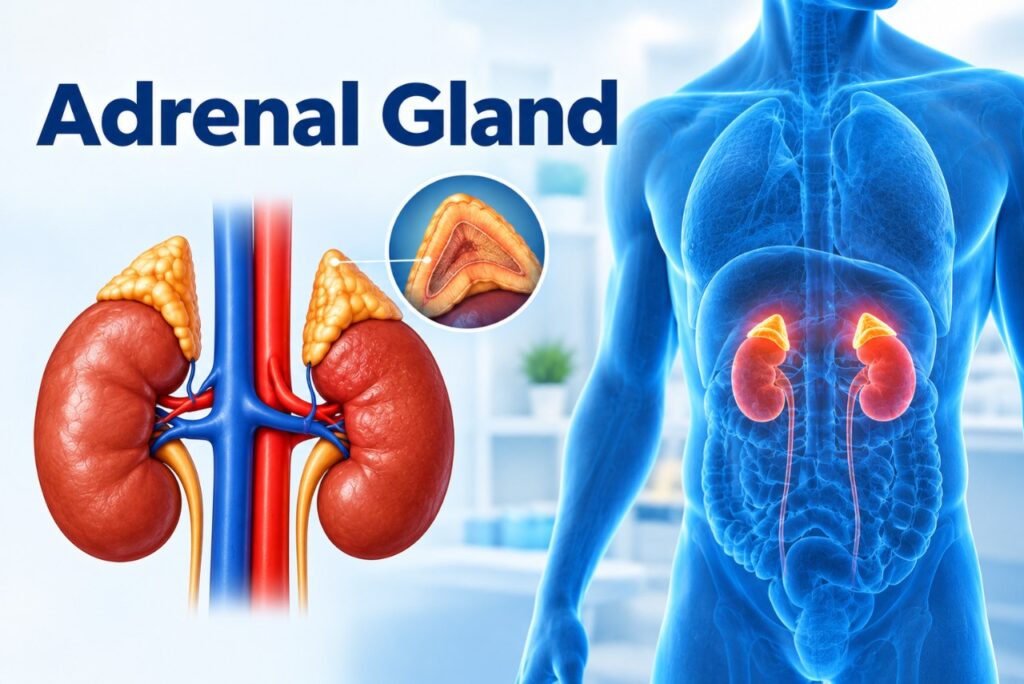
Each adrenal gland produces hormones that regulate blood pressure, salt and water balance, blood sugar, stress response and metabolism, including cortisol, aldosterone, adrenaline and noradrenaline. A tumour that overproduces any of these can affect the whole body.
Adrenal Conditions
- Pheochromocytoma, a tumour that releases adrenaline-like hormones
- Primary aldosteronism (Conn’s syndrome)
- Cortisol-producing tumours causing Cushing’s syndrome
- Adrenal adenomas and incidentalomas found on scans
- Cysts and fatty tumours such as myelolipomas
- Adrenal cancer and spread from other cancers
What are the Symptoms?
Symptoms depend on the hormone involved, and many adrenal lumps cause none at all.
- Pheochromocytoma: episodes of headache, palpitations, sweating, anxiety and high blood pressure
- Primary aldosteronism: high blood pressure, low potassium, muscle weakness, cramps and frequent urination
- Cushing’s syndrome: weight gain around the trunk, a rounded face, purple stretch marks, easy bruising and raised blood sugar
- Large tumours: flank or abdominal pain and a feeling of fullness
What are the Causes?
In most cases, the cause is not known. A few adrenal tumours are linked to inherited conditions, which is why a family history is worth sharing with your surgeon.
How Adrenal Problems Are Diagnosed
Diagnosis combines hormone tests with imaging. Depending on suspicion, you may have blood or urine tests for metanephrines, an aldosterone-to-renin ratio, cortisol and dexamethasone suppression tests, and checks for potassium and blood sugar. A CT or MRI scan shows the size and features of the tumour, and specialised scans or adrenal vein sampling are used in selected cases. An endocrinologist usually works alongside the surgeon. A suspected pheochromocytoma should never be sampled by needle biopsy.
Treatment Options
- Monitoring: small, non-functioning, benign-looking lumps may only need periodic scans and hormone checks.
- Medicines: drugs that block aldosterone, blood pressure control and, for pheochromocytoma, weeks of preparation with specific medicines before any operation.
- Laparoscopic adrenalectomy: the standard operation for most adrenal tumours that need removal, performed through small incisions.
- Open adrenalectomy: reserved for very large tumours or those suspected to be cancerous.
- After surgery: hormone levels are rechecked, and some patients, especially those with Cushing’s syndrome, need temporary steroid replacement.
Benefits of Laparoscopic Adrenalectomy
- Smaller scars and less pain
- A shorter hospital stay
- Quicker return to routine
- Better control of blood pressure and hormone-related symptoms in many patients
Preparation and Recovery
Preparation may include blood pressure control, potassium correction and, for pheochromocytoma, careful medical preparation. Many patients stay in hospital for a few days and return to light activity within one to two weeks. Regular follow-up checks make sure hormones settle as expected.
What to Expect at Your First Visit
Bring every scan and hormone test you have had, along with a record of your blood pressure readings and the medicines you take. The surgeon will ask about episodes of sweating, palpitations or headaches, changes in weight, muscle weakness and any family history of adrenal or endocrine disease. You will then be told which hormone tests and scans are still needed and whether treatment is required at all.
Why Lumps Found by Chance Still Need Checking
Many adrenal lumps are discovered by accident during a scan done for another reason. Even then, two questions must be answered: is the lump producing excess hormones, and does it look benign on imaging? In most people a few targeted tests settle this, and a large share of such lumps need nothing more than follow-up. Skipping the check, however, can leave a hormone-producing tumour unrecognised.
Common Myths About Adrenal Problems
- Myth: High blood pressure is always due to lifestyle.
- Adrenal surgery means lifelong hormone tablets.
- The body cannot cope without an adrenal gland.
- Fact: A small share is caused by adrenal tumours, especially when it starts young, resists several medicines or comes with low potassium.
- Many patients need none, and those who do, such as some with Cushing’s syndrome, often need them only for a period.
- The other gland usually compensates well.
FAQs
Do all adrenal lumps need to be removed?
No. Many small, non-functioning lumps only need monitoring.
Can I live with one adrenal gland?
Yes. The remaining gland usually takes over, though some patients need temporary hormone support.
Is surgery for pheochromocytoma safe?
With proper preparation and an experienced team, it can be done safely.
Will my blood pressure return to normal after surgery?
Often it improves or normalises, but the outcome varies between patients.
Is an adrenal tumour usually cancer?
No. Most are benign, but each one needs proper assessment.
Expert Surgical Care, Personalised for You
Get the right guidance and treatment advice from Dr. Tarun Mittal.
📞 Call Now: +91 88516 32660
Schedule Your Consultation Today or Call Now to Book Your Appointment!