Welcome to Healing Touch Clinic


Fissure Treatment in Noida
Passing stool should never feel like passing broken glass. If that describes your bowel movements, with sharp pain, a burning ache that lingers for hours and a streak of bright red blood on the tissue, an anal fissure is a very likely reason. It is among the most common anorectal problems and also one of the most under-reported, because many people feel too embarrassed to talk about it.
Residents of Noida and nearby areas who are dealing with this do not need to suffer in silence. Healing Touch Clinic in Sector 132 specialises in anorectal care, and Dr. Tarun Mittal offers step-by-step treatment that starts with the gentlest effective option and moves to a procedure only when it is truly needed.
What Is an Anal Fissure?
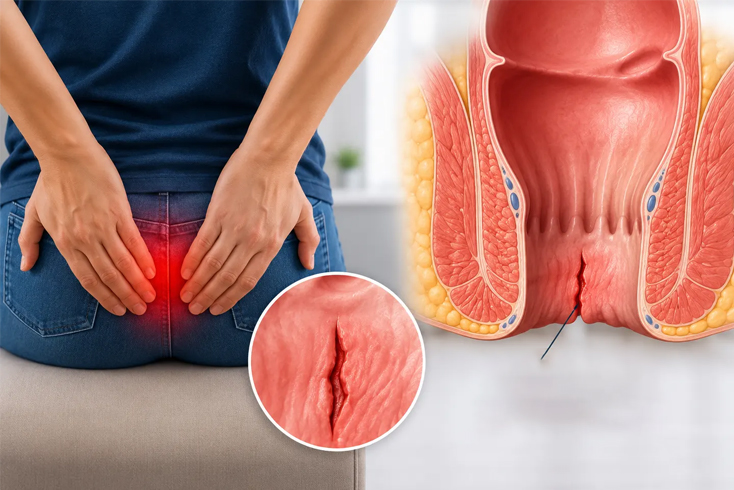
A fissure is a small tear in the thin lining of the anal canal. A recent tear is called acute and often heals with simple measures. If it persists beyond six to eight weeks it is called chronic, and may show a hardened edge, a skin tag outside the anus and exposed muscle fibres. The tear makes the sphincter muscle go into spasm, which reduces blood flow and stops the area from healing, so the cycle of pain keeps repeating.
What are the Symptoms?
- Sharp, cutting pain during and after passing stool
- Burning or throbbing that can last from minutes to hours
- Bright red blood on the stool or toilet tissue
- Fear of going to the toilet, which leads to more constipation
- Itching or a small lump near the anus
- A visible tear when the area is examined
Causes and Risk Factors
Hard, dry stools and straining are the leading cause. Others include chronic diarrhoea, low fibre intake, too little water, pregnancy and childbirth, long periods of sitting, a tight anal sphincter and earlier anal surgery. Less often, Crohn’s disease, tuberculosis or infections are responsible, especially when the fissure sits on the side rather than in the midline.
How a Fissure Is Diagnosed
Diagnosis is usually based on your history and a gentle visual examination, since the tear can often be seen by parting the buttocks. If the pain is too severe, a detailed internal examination may be postponed or done under anaesthesia. When the fissure looks unusual, bleeding is heavy or you are older, a colonoscopy or blood tests may be advised to rule out other causes.
Treatment Options
Conservative care. Most acute fissures heal with:
- A diet rich in fibre, such as vegetables, fruit, whole grains and isabgol
- Plenty of water through the day
- Warm sitz baths for ten to fifteen minutes, especially after passing stool
- Stool softeners if prescribed
- Ointments such as nitroglycerin or diltiazem to relax the sphincter, and local anaesthetic gels for pain relief
Minimally invasive care. Botulinum toxin injection temporarily relaxes the sphincter and gives the tear time to heal.
Surgical care. For chronic fissures that do not respond, lateral internal sphincterotomy, a small controlled release of part of the internal sphincter, is a well-established option. An advancement flap may be preferred when cutting the muscle is not desirable, for example after childbirth. Fissurectomy and laser-assisted techniques are used in selected cases.
Benefits of Treatment
- Relief from pain, often within days of a procedure
- Healing of a long-standing tear
- Control of bleeding and itching
- Lower chance of recurrence once bowel habits are corrected
- Day care treatment in most cases
Recovery and Aftercare
Most people return to routine activity within a few days. Continue sitz baths, high-fibre meals and enough fluids, and avoid straining. Mild discomfort or a little spotting can occur early on. Minor, usually temporary changes in gas or stool control are uncommon after sphincter surgery, and your surgeon will discuss them in advance.
Preventing Fissures
- Eat fibre-rich food and drink adequate water
- Respond to the urge to pass stool without delay
- Avoid long sessions on the toilet
- Stay physically active
- Treat constipation or diarrhoea early.
What to Expect at Your First Visit
A fissure is usually recognised quickly, so the visit is short and gentle. The surgeon will ask about the pattern of your pain, your stool habits and your diet, and may suggest starting treatment straight away. You will leave with clear advice on diet, sitz baths and medicines, along with the signs that would call for an earlier review.
Common Myths About Fissures
- Myth: Any bleeding from the anus means piles. Fact: A fissure is a very common cause of bright red blood, and only an examination can tell the two apart.
- Myth: Surgery is the only cure. Fact: Most acute fissures heal with fibre, fluids, sitz baths and ointments.
- Myth: Eating less will reduce the pain. Fact: Skipping meals can make stools harder, so fibre and fluids work far better.
FAQs
Can a hernia heal on its own?
A hernia caused by a weakness in the abdominal wall generally does not repair itself. Management depends on the type, symptoms and risk associated with the particular hernia.
Is surgery required for every hernia?
Not necessarily. Some hernias may be monitored depending on the patient’s symptoms and clinical situation. A surgeon can determine whether observation or surgical repair is appropriate.
What is laparoscopic hernia surgery?
Laparoscopic hernia surgery is a minimally invasive procedure performed through small incisions using a camera and specialized instruments to repair the hernia.
Is laparoscopic hernia surgery suitable for everyone?
No. The appropriate surgical technique depends on the type of hernia, previous surgeries, medical history and other individual factors.
How long does recovery take after hernia surgery?
Recovery varies according to the type of hernia, surgical technique and individual health. Your surgeon will provide personalized instructions about activity and recovery.
Can a hernia come back after surgery?
Hernia recurrence is possible after repair. The risk depends on several factors, including the type of hernia, surgical technique, patient factors and postoperative recovery.
Expert Surgical Care, Personalised for You
Get the right guidance and treatment advice from Dr. Tarun Mittal.
📞 Call Now: +91 88516 32660
Schedule Your Consultation Today or Call Now to Book Your Appointment!