Welcome to Healing Touch Clinic


pancreatic-treatment
Pancreatic Treatment in Noida at Healing Touch Clinic
Upper abdominal pain that bores through to the back, worsens after a heavy meal and brings waves of nausea is not something to wait out. The pancreas hides deep behind the stomach, so its problems are often recognised late, yet early assessment can make a major difference to how things turn out.
If you are a resident in Noida and have been diagnosed with pancreatitis, a pancreatic cyst or a mass, or you are simply worried about persistent upper abdominal pain, Healing Touch Clinic in Sector 132 provides specialist surgical evaluation. Dr. Tarun Mittal works with each patient to decide whether medical care, a procedure or an operation is the right step.
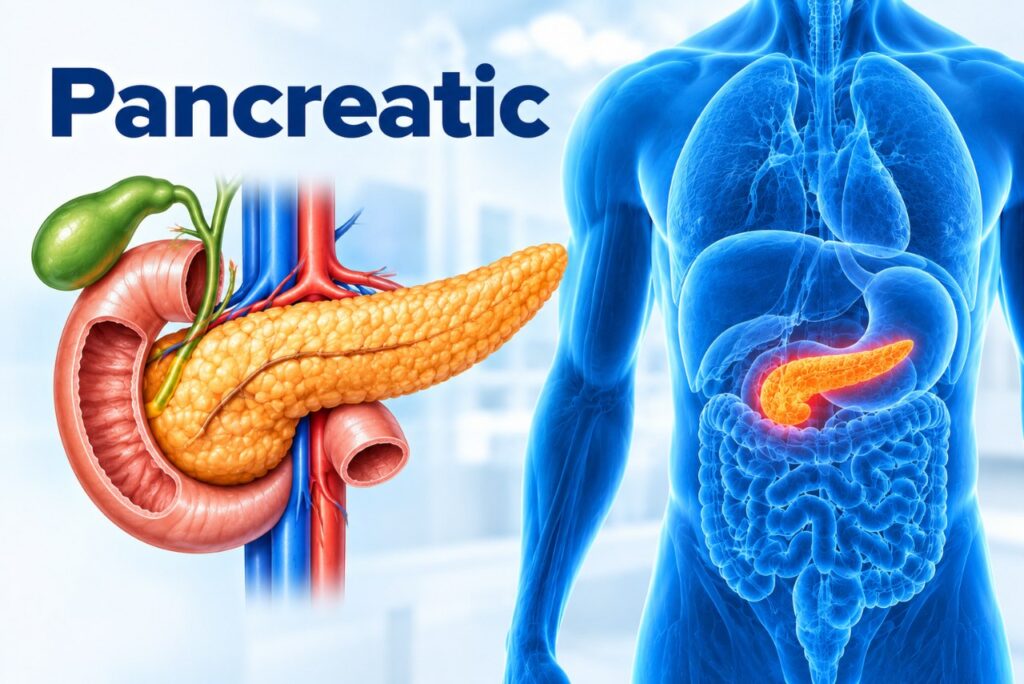
What Does the Pancreas Do?
The pancreas makes digestive enzymes that break down food and hormones, including insulin, that control blood sugar. A problem here can affect digestion, sugar levels and the flow of bile.
Pancreatic Conditions
- Acute pancreatitis, a sudden inflammation
- Chronic pancreatitis, a long-term inflammation with scarring
- Pseudocysts and fluid collections after pancreatitis
- Pancreatic cysts and tumours, both benign and malignant
- Blocked pancreatic ducts and stones
What are the Symptoms?
- Upper abdominal pain that radiates to the back and is often worse after eating
- Nausea and vomiting
- Bloating and loss of appetite
- Pale, greasy, foul-smelling stools
- Yellowing of the eyes and skin
- Unexplained weight loss or newly detected diabetes
- Fever and a fast pulse in severe attacks
Severe, unrelenting pain with repeated vomiting needs urgent hospital care.
Causes and Risk Factors
Gallstones and alcohol are the two most common causes of pancreatitis. Others include very high triglyceride levels, smoking, some medicines, abdominal injury, complications of endoscopic procedures, autoimmune disease and inherited factors. Tumours or cysts can block the pancreatic duct and trigger inflammation.
How Diagnosis Is Done
Blood tests such as amylase and lipase help confirm acute pancreatitis, while liver tests, triglycerides and blood sugar show the cause and severity. Ultrasound looks for gallstones, and CT or MRI with MRCP shows the gland, ducts and any collections or masses in detail. Endoscopic ultrasound may be used to examine small lesions or take samples. Tumour markers can support, but never replace, imaging and clinical judgement.
Benefits of Early Treatment
- Prevents complications such as infection and fluid collections
- Reduces the chance of repeated attacks
- Protects digestion and blood sugar control
- Allows tumours to be found and treated at an earlier stage
Lifestyle and Prevention
- Avoid alcohol and quit smoking
- Choose smaller, lower-fat meals
- Keep triglycerides and weight under control
- Treat gallstones promptly
- Keep follow-up visits and scans as advised
Treatment Options
- Acute pancreatitis: most mild attacks settle with hospital care including intravenous fluids, pain relief, early nutrition and treatment of the cause. Severe cases may need intensive care.
- Gallstone-related pancreatitis: removal of the gallbladder by laparoscopic surgery prevents further attacks, and an endoscopic procedure (ERCP) may be used if a stone is blocking the bile duct.
- Collections and pseudocysts: drainage by endoscopic, percutaneous or surgical routes when they cause symptoms or infection. Infected dead tissue may need minimally invasive removal.
- Chronic pancreatitis: pain control, enzyme supplements, stopping alcohol and tobacco, diabetes care and, when ducts are blocked, endoscopic or surgical drainage.
- Cysts and tumours: some cysts need only regular surveillance. Others call for surgery such as the Whipple procedure, distal pancreatectomy or removal of a small lesion, with keyhole techniques used in selected cases.
Many pancreatic problems are best managed with input from gastroenterologists, radiologists and, where needed, oncologists.
Recovery Process
Recovery depends on the condition. After mild pancreatitis, people usually resume normal food and activity within days to weeks. After pancreatic surgery, the stay is longer and nutrition and enzyme support are closely managed. Your surgeon will outline a plan before treatment.
What to Expect at Your First Visit
The surgeon will ask about the nature of your pain, your meals, alcohol use, medicines, weight changes and any earlier gallstone attacks. Please bring all blood tests and scans. Often a combination of blood tests and a CT or MRI is advised, and you will be told clearly whether the plan is treatment, drainage, surveillance or surgery.
Common Myths About the Pancreas
- Myth: Pancreatitis affects only heavy drinkers. Fact: Gallstones are an equally important cause, and some cases have no obvious trigger.
- Myth: A normal ultrasound rules out a pancreatic problem. Fact: The pancreas lies deep behind the stomach and bowel gas, so CT, MRI or endoscopic ultrasound is often needed.
- Myth: Pancreatic surgery is only done for cancer. Fact: It is also used for cysts, benign tumours, stones, blocked ducts and complications of pancreatitis.
FAQs
Is pancreatitis curable?
Acute pancreatitis usually recovers fully once the cause is treated. Chronic pancreatitis is a long-term condition that can be controlled but not reversed.
Does a pancreatic cyst always mean cancer?
No. Many cysts are harmless and need only monitoring, but some need closer assessment.
Will I need surgery?
Not always. Many patients are treated with medicines, endoscopic procedures or drainage.
Can I eat normally afterwards?
Most people can return to a balanced diet, usually lower in fat, with enzymes if advised.
Can pancreatic problems be prevented?
Partly. Avoiding alcohol and smoking, treating gallstones and controlling triglycerides lower the risk.
Book a consultation with Dr. Tarun Mittal at Healing Touch Clinic, ATS Bouquet, Sector 132, Noida, or call +91 88516 32660.
Expert Surgical Care, Personalised for You
Get the right guidance and treatment advice from Dr. Tarun Mittal.
📞 Call Now: +91 88516 32660
Schedule Your Consultation Today or Call Now to Book Your Appointment!