
Hernia Treatment
Hernia Treatment & Laparoscopic Hernia Surgery in Noida
Expert Hernia Care at Healing Touch Clinic, Noida
A hernia occurs when an internal organ or tissue pushes through a weak area in the surrounding muscle or connective tissue. It may appear as a visible bulge and can sometimes cause pain, discomfort or a feeling of pressure, particularly during physical activity.
At Healing Touch Clinic, Sector 132, Noida, patients can consult Dr.Tarun Mittal for evaluation and treatment of hernia conditions, including minimally invasive surgical options. Dr.Tarun Mittal is a laparoscopic surgeon with specialized training in minimal access surgery and dedicated hernia training.
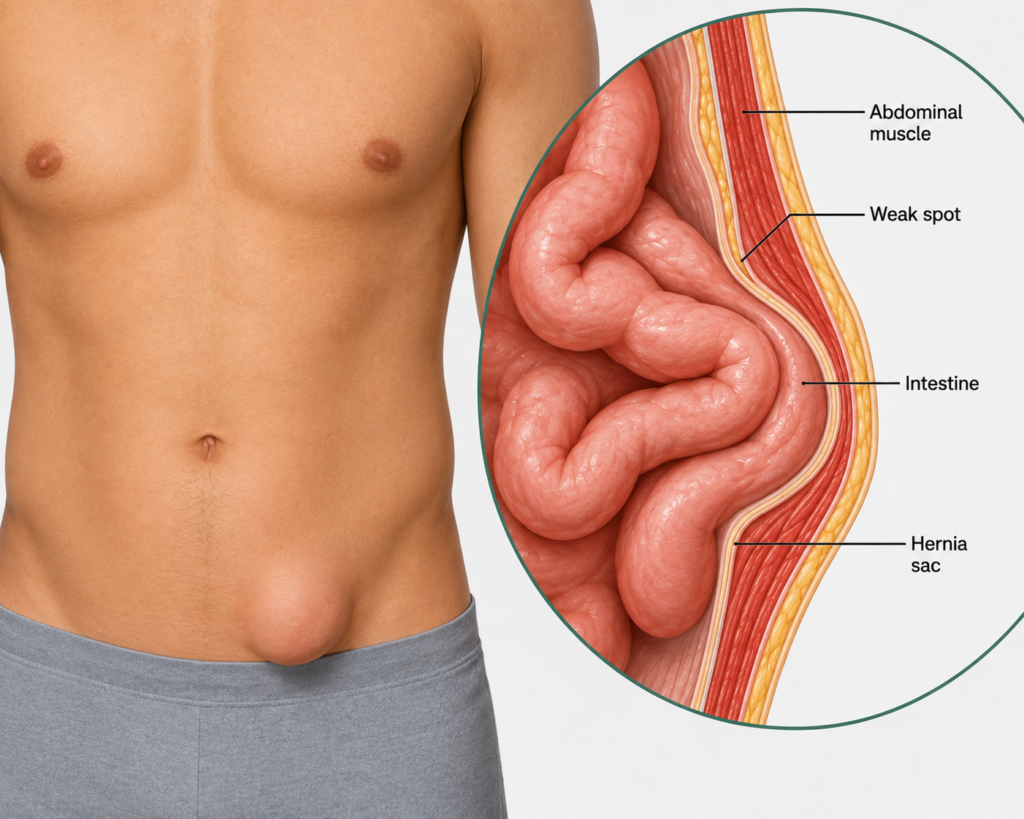
What Is a Hernia?
A hernia develops when tissue, such as part of the intestine, pushes through a weakened area in the abdominal wall or surrounding tissue.
Some hernias may remain relatively small and cause few symptoms, while others can gradually become larger or more uncomfortable. A surgeon can assess the hernia and recommend the most appropriate treatment based on its type, size, symptoms and overall health.
Common Types of Hernia
Different types of hernia can occur in different areas of the body, including:
Inguinal Hernia
An inguinal hernia develops in the groin area and is one of the most common types of abdominal wall hernia.
Umbilical Hernia
An umbilical hernia occurs around the belly button and may appear as a bulge near the navel.
Incisional Hernia
An incisional hernia can develop at or near the site of a previous abdominal surgical incision.
Ventral Hernia
A ventral hernia occurs through a weakness in the front wall of the abdomen and may appear as a noticeable abdominal bulge.
Recurrent Hernia
A hernia can sometimes return after previous hernia repair. Recurrent cases may require careful evaluation and individualized surgical planning.
Symptoms of Hernia
Common symptoms can include:
- A visible or noticeable bulge in the abdomen or groin
- Pain or discomfort A visible or noticeable bulge in the abdomen or groin at the hernia site
- A feeling of heaviness or pressure
- Discomfort while coughing or sneezing
- Pain during physical activity
- Gastrointestinal surgery
- A bulge that becomes more noticeable when standing or straining
Hernia Treatment in Noida
Treatment depends on the type of hernia, its size, symptoms, medical history and overall health.
Small hernias with minimal symptoms may sometimes be monitored under medical guidance. However, a symptomatic, enlarging or complicated hernia may require surgical repair.
A surgeon will discuss the available options after evaluating the individual patient.
Laparoscopic Hernia Surgery
Laparoscopic hernia repair is a minimally invasive surgical technique that uses small incisions, a camera and specialized surgical instruments to repair the weakened area.
Dr.Tarun Mittal’s official website lists advanced laparoscopic hernia repair among the procedures he performs. His professional background includes postdoctoral fellowship training in minimal access surgery and dedicated hernia training.
The appropriate surgical technique depends on the patient’s specific hernia and clinical circumstances.
Benefits of Minimally Invasive Hernia Surgery
When laparoscopic surgery is appropriate, potential advantages can include:
- Smaller incisions
- Less disruption to surrounding tissues
- Reduced postoperative discomfort in many patients
- Smaller scars
- Earlier mobility
- Potentially faster return to routine activities
These benefits can vary between patients, and laparoscopic surgery is not necessarily appropriate for every hernia.
FAQs
Can a hernia heal on its own?
A hernia caused by a weakness in the abdominal wall generally does not repair itself. Management depends on the type, symptoms and risk associated with the particular hernia.
Is surgery required for every hernia?
Not necessarily. Some hernias may be monitored depending on the patient’s symptoms and clinical situation. A surgeon can determine whether observation or surgical repair is appropriate.
What is laparoscopic hernia surgery?
Laparoscopic hernia surgery is a minimally invasive procedure performed through small incisions using a camera and specialized instruments to repair the hernia.
Is laparoscopic hernia surgery suitable for everyone?
No. The appropriate surgical technique depends on the type of hernia, previous surgeries, medical history and other individual factors.
How long does recovery take after hernia surgery?
Recovery varies according to the type of hernia, surgical technique and individual health. Your surgeon will provide personalized instructions about activity and recovery.
Can a hernia come back after surgery?
Hernia recurrence is possible after repair. The risk depends on several factors, including the type of hernia, surgical technique, patient factors and postoperative recovery.