
When Does a Gallbladder Problem Require Medical Attention?
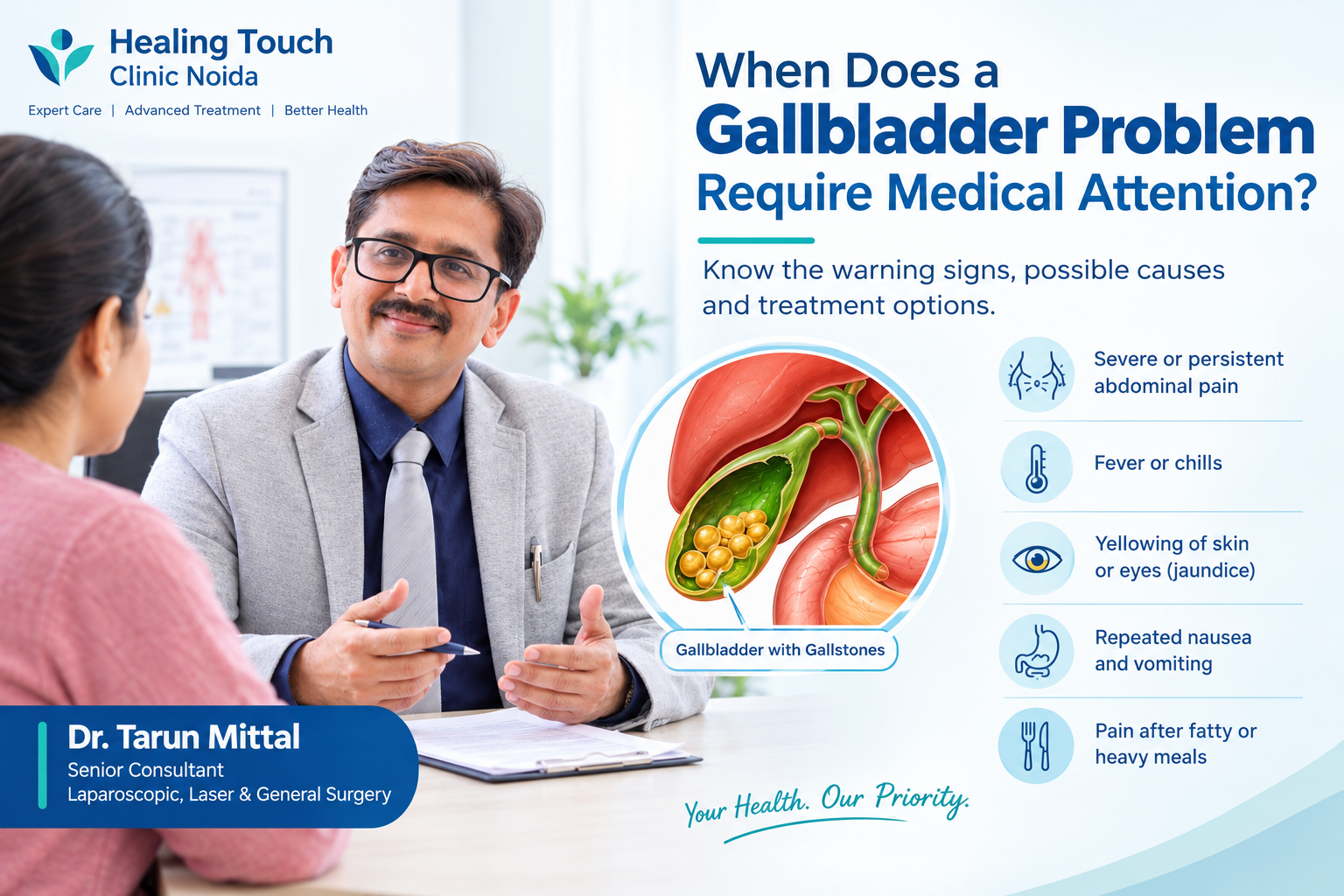
Gallbladder problems are common and can sometimes develop without noticeable symptoms. However, when gallstones block the bile ducts or the gallbladder becomes inflamed, a person may experience abdominal pain, nausea, vomiting, and other symptoms that require medical evaluation.
If you are experiencing recurring pain in the upper right side of your abdomen, discomfort after meals, or have been diagnosed with gallstones, it is important to understand when to consult a doctor.
For people searching for gallbladder treatment in Noida, understanding the warning signs can help them seek timely medical advice and avoid delays in diagnosis.
Dr. Tarun Mittal, a surgeon specializing in laparoscopic and general surgery, provides surgical consultation at Healing Touch Clinic in Sector 132, Noida. Patients can discuss their symptoms, investigation reports, and suitable treatment options with a qualified surgeon.
What Is the Gallbladder and Why Can Problems Occur?
The gallbladder is a small, pear-shaped organ located beneath the liver on the upper right side of the abdomen. It stores bile, a digestive fluid produced by the liver that helps the body digest fats.
Gallbladder problems can develop for several reasons, including:
- Gallstones: Hardened deposits that form inside the gallbladder.
- Gallbladder inflammation: Also called cholecystitis, this can occur when a gallstone blocks the gallbladder’s outlet.
- Bile duct obstruction: A stone may block a duct carrying bile from the liver and gallbladder.
- Gallstone-related pancreatitis: A gallstone may obstruct the pancreatic duct and cause inflammation of the pancreas.
Some people have gallstones without symptoms and may not require immediate treatment. However, symptomatic gallstones and complications require medical assessment.
1. Severe or Persistent Abdominal Pain
One of the most common warning signs of a gallbladder problem is pain in the upper right side or upper middle portion of the abdomen.
The pain may begin suddenly and can sometimes spread to the back or right shoulder. It may occur after eating a heavy or fatty meal and can last from around 30 minutes to several hours.
You should seek medical evaluation if you experience:
- Repeated pain in the upper right abdomen
- Abdominal pain lasting longer than 30 minutes
- Pain that returns after meals
- Pain accompanied by nausea or vomiting
- Severe or persistent abdominal discomfort
When to seek emergency care: Sudden, severe abdominal pain or pain accompanied by persistent vomiting requires urgent medical assessment. Do not wait for a routine appointment if the symptoms are severe.
2. Fever or Chills Along With Abdominal Pain
Fever and chills accompanying abdominal pain may indicate inflammation or infection involving the gallbladder or bile ducts.
These symptoms should not be ignored, particularly if the pain is persistent or becoming worse.
Possible warning signs include:
- Elevated body temperature
- Shivering or chills
- Persistent pain beneath the right ribs
- Nausea and vomiting
- Feeling unusually weak or unwell
These symptoms may indicate acute cholecystitis or another complication that needs prompt assessment. Early evaluation can help doctors identify the cause and determine the appropriate treatment.
3. Yellowing of the Skin or Eyes
Yellowing of the skin or the whites of the eyes is known as jaundice. It may occur when a gallstone blocks the bile duct and prevents bile from flowing normally.
Other symptoms may include:
- Dark or tea-coloured urine
- Pale or light-coloured stools
- Itching of the skin
- Abdominal discomfort
- Nausea or loss of appetite
Jaundice accompanied by suspected gallbladder symptoms requires urgent medical assessment. A blocked bile duct can lead to serious complications if left untreated.
Do not attempt to manage these symptoms through dietary changes alone.
4. Repeated Nausea and Vomiting
Nausea and vomiting may occur during a gallbladder attack, especially when gallstones obstruct the flow of bile.
Although these symptoms can also occur with many other digestive conditions, repeated vomiting alongside upper abdominal pain should be evaluated by a medical professional.
Seek prompt medical advice if you experience:
- Repeated vomiting
- Difficulty keeping fluids down
- Persistent abdominal pain
- Vomiting accompanied by fever or chills
- Increasing weakness or signs of dehydration
If symptoms are severe or you cannot keep fluids down, seek urgent care rather than waiting for them to resolve on their own.
5. Pain After Eating Fatty or Heavy Meals
Some people with gallstones notice pain or discomfort after eating fried foods, rich meals, or foods containing substantial amounts of fat.
This happens because eating stimulates the gallbladder to contract and release bile. If a gallstone obstructs the flow of bile, the contraction may trigger pain.
However, indigestion, acidity, bloating, and upper abdominal discomfort can also have other causes. Symptoms alone cannot confirm gallstones.
If you repeatedly experience discomfort after meals, consult a doctor to determine whether gallbladder disease or another digestive condition may be responsible.
6. When Should You See a General or Laparoscopic Surgeon?
You should consider a surgical consultation if:
- An ultrasound has confirmed gallstones and you have symptoms.
- You experience repeated episodes of suspected gallbladder pain.
- Your doctor suspects inflammation or obstruction.
- Your symptoms interfere with eating or normal daily activities.
- Your treating doctor recommends a surgical opinion.
Dr. Tarun Mittal specializes in laparoscopic, bariatric, and general surgery. At Healing Touch Clinic in Sector 132, Noida, patients can enquire about a consultation to discuss gallbladder symptoms and the next steps in their care.
A surgeon can review your symptoms, medical history, and investigation reports to determine whether further testing, observation, medication for associated symptoms, or surgery should be considered.
The appropriate treatment depends on the diagnosis and individual circumstances.
7. How Are Gallbladder Problems Diagnosed?
A doctor may recommend several assessments to identify the cause of your symptoms.
Medical history and physical examination
The doctor will ask about the location and duration of your pain, its relationship to meals, associated symptoms, previous episodes, and medical history.
Ultrasound of the abdomen
An abdominal ultrasound is commonly used to detect gallstones and assess the gallbladder.
Blood tests
Blood tests may be recommended to assess liver function and look for signs of inflammation or other complications.
Additional investigations
Depending on the findings, further imaging or other investigations may be necessary to assess the bile ducts or identify another cause of abdominal pain.
Bring any previous ultrasound reports, blood tests, prescriptions, and medical records to your appointment.
8. Does Every Gallbladder Problem Require Surgery?
No. Treatment depends on whether gallstones are causing symptoms, whether complications are present, and the patient’s overall health.
- Gallstones without symptoms: These may not require immediate treatment, although individual circumstances should be reviewed by a doctor.
- Symptomatic gallstones: Surgical removal of the gallbladder may be recommended, particularly when attacks recur.
- Inflammation or bile duct obstruction: Prompt medical treatment is necessary, and surgery or other procedures may be required.
- Other causes of abdominal pain: Treatment depends on the underlying diagnosis.
Laparoscopic cholecystectomy, or laparoscopic gallbladder removal, is a commonly used procedure for symptomatic gallstone disease when surgery is appropriate.
During this procedure, the surgeon removes the gallbladder through small incisions using a camera and specialised instruments. Not every patient is suitable for the same surgical approach, so the surgeon will explain the available options and associated risks.
9. What Can You Do While Waiting for a Medical Consultation?
If you have suspected or confirmed gallstones, consider the following measures while arranging appropriate medical care:
- Eat balanced meals and consider smaller portions if large meals trigger symptoms.
- Limit foods that consistently worsen your discomfort, including very fatty or fried foods.
- Stay hydrated if you can tolerate fluids.
- Keep a record of your symptoms and possible food triggers.
- Take medicines only as advised by your healthcare professional.
- Avoid crash diets or rapid weight-loss programmes.
These measures do not remove gallstones or treat a blocked bile duct. Do not delay urgent assessment because symptoms temporarily improve.
Why Consider a Consultation With Dr. Tarun Mittal?
Dr. Tarun Mittal is a surgeon with expertise in laparoscopic and general surgery, including gallbladder removal surgery. His professional background includes postgraduate training in general surgery and specialised training in minimal access surgery.
For patients experiencing gallbladder symptoms, a consultation can help clarify the possible diagnosis, the need for further investigations, and whether surgery is an appropriate option.
Patients can contact Healing Touch Clinic in Sector 132, Noida, to enquire about appointment availability and surgical consultation.
Clinic details:
Healing Touch Clinic
Shop No. S-9, Second Floor, Retail Block, ATS Bouquet, Sector 132, Noida, Uttar Pradesh 201304.
Website: https://healingtouchclinicnoida.com
Frequently Asked Questions (FAQs)
1. When should I see a doctor for gallbladder pain?
Seek medical evaluation for repeated upper abdominal pain or pain lasting more than 30 minutes. Severe or persistent pain, fever, chills, jaundice, or repeated vomiting warrants urgent assessment.
2. What are the early signs of gallstones?
Early symptoms may include pain beneath the right ribs or in the upper middle abdomen, nausea, and discomfort after meals. Some people have gallstones without any symptoms.
3. Can gallstones go away without surgery?
Some gallstones cause no symptoms and may not require treatment. However, symptomatic gallstones often require further assessment, and surgery may be recommended. Do not assume that symptoms disappearing means the stones have gone away.
4. Is laparoscopic gallbladder surgery safe?
Laparoscopic gallbladder removal is a commonly performed procedure. As with any operation, it has potential risks, and its suitability depends on the patient’s condition. Your surgeon should explain the benefits, risks, alternatives, and expected recovery.
5. Can gallbladder problems cause back pain?
Yes. Gallbladder-related pain may spread to the back or right shoulder. However, back pain has many possible causes, so medical evaluation may be needed to identify the source.
6. Who should I consult for gallbladder treatment in Noida?
You can consult a qualified general or laparoscopic surgeon for assessment of suspected gallbladder disease. Dr. Tarun Mittal is a surgeon specialising in laparoscopic and general surgery, and patients can enquire about consultation availability at Healing Touch Clinic, Sector 132, Noida.
7. What tests are required to diagnose gallstones?
An abdominal ultrasound and blood tests are commonly used. Additional investigations may be recommended depending on symptoms and the initial findings.
Conclusion
Gallbladder problems should not be ignored when they cause repeated abdominal pain, nausea, vomiting, fever, or jaundice. Early medical evaluation can help identify gallstones, detect complications, and determine the most appropriate treatment.
If you are experiencing symptoms and searching for gallbladder treatment in Noida, arrange a consultation with a qualified medical professional. Dr. Tarun Mittal and Healing Touch Clinic Noida can be contacted to enquire about surgical consultation and available services.
Important: Seek emergency medical care for sudden severe abdominal pain, persistent vomiting, fever with abdominal pain, or yellowing of the skin or eyes.




Add comment